Sunday, June 28, 2015

Palazzo Massimo

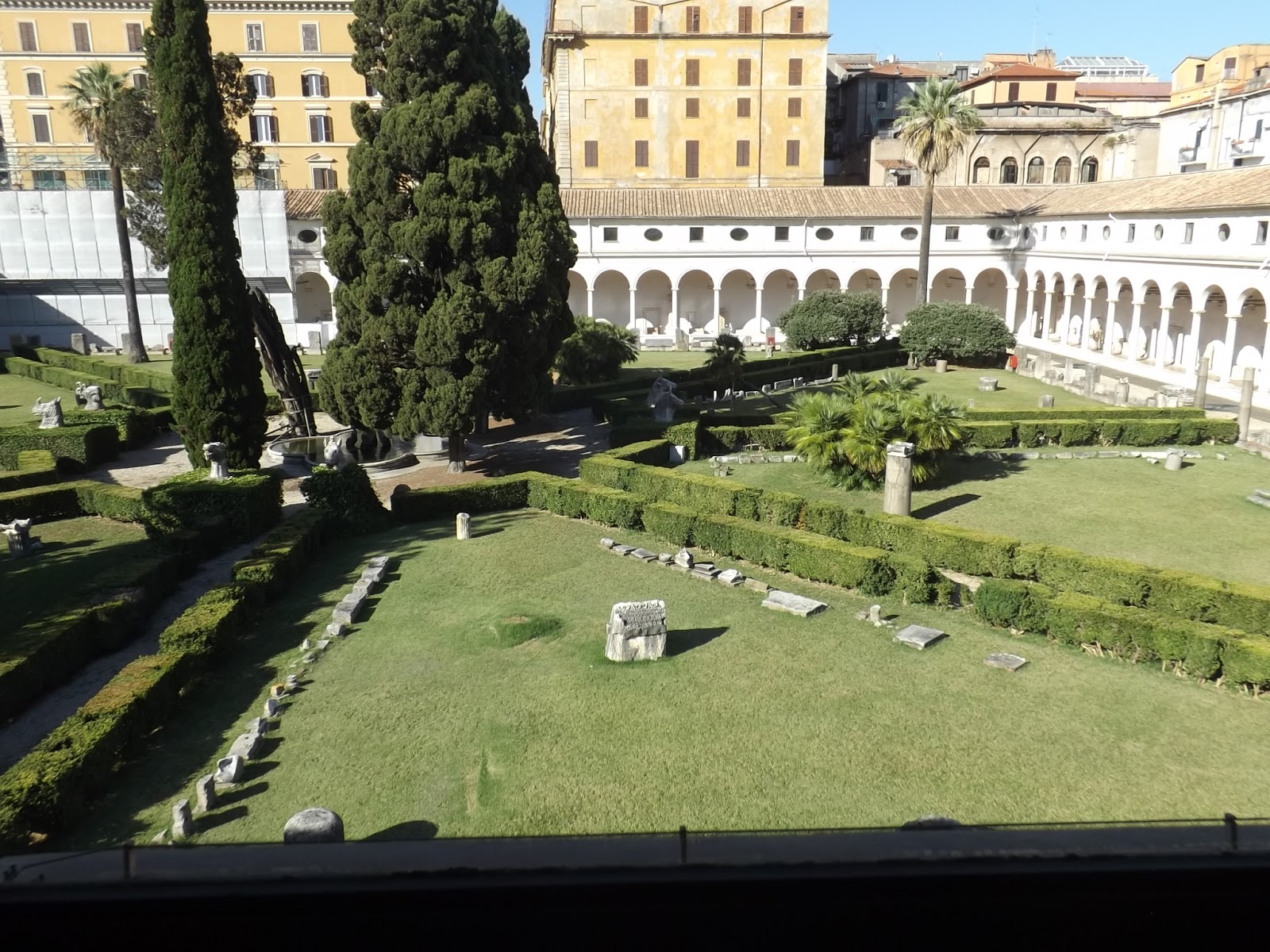
On Friday, 26 June, after a morning spent at the Academy, we went to the Palazzo Massimo Museum in the afternoon.  Palazzo Massimo is near Termini, the main train and metro station in Rome.  The museum holds a number of world famous statues, portrait busts and mosaics.

Germanicus: Germanicus was the son of Drusus Claudius and Drusus was Augustus' step-son.  Germanicus was popular and had distinguished himself militarily at a young age.  He was poisoned on orders from his uncle (and adoptive father) Tiberius.

Augustus: in his role as Pontifex Maximus--the chief priest of Rome.

Niobe: Niobe boasted she was better than Leto who was the mother of Apollo and Diana.  In response, Apollo and Diana killed her children and Niobe was turned into a weeping rock.

The Boxer: a famous Hellenistic bronze from the 200's BC.


Seleucid Prince: another Hellenistic bronze from the 200's BC.


 Venus of Menophantos: a greek sculpture of the first century BC.

Minerva

The discus thrower

Dionysius

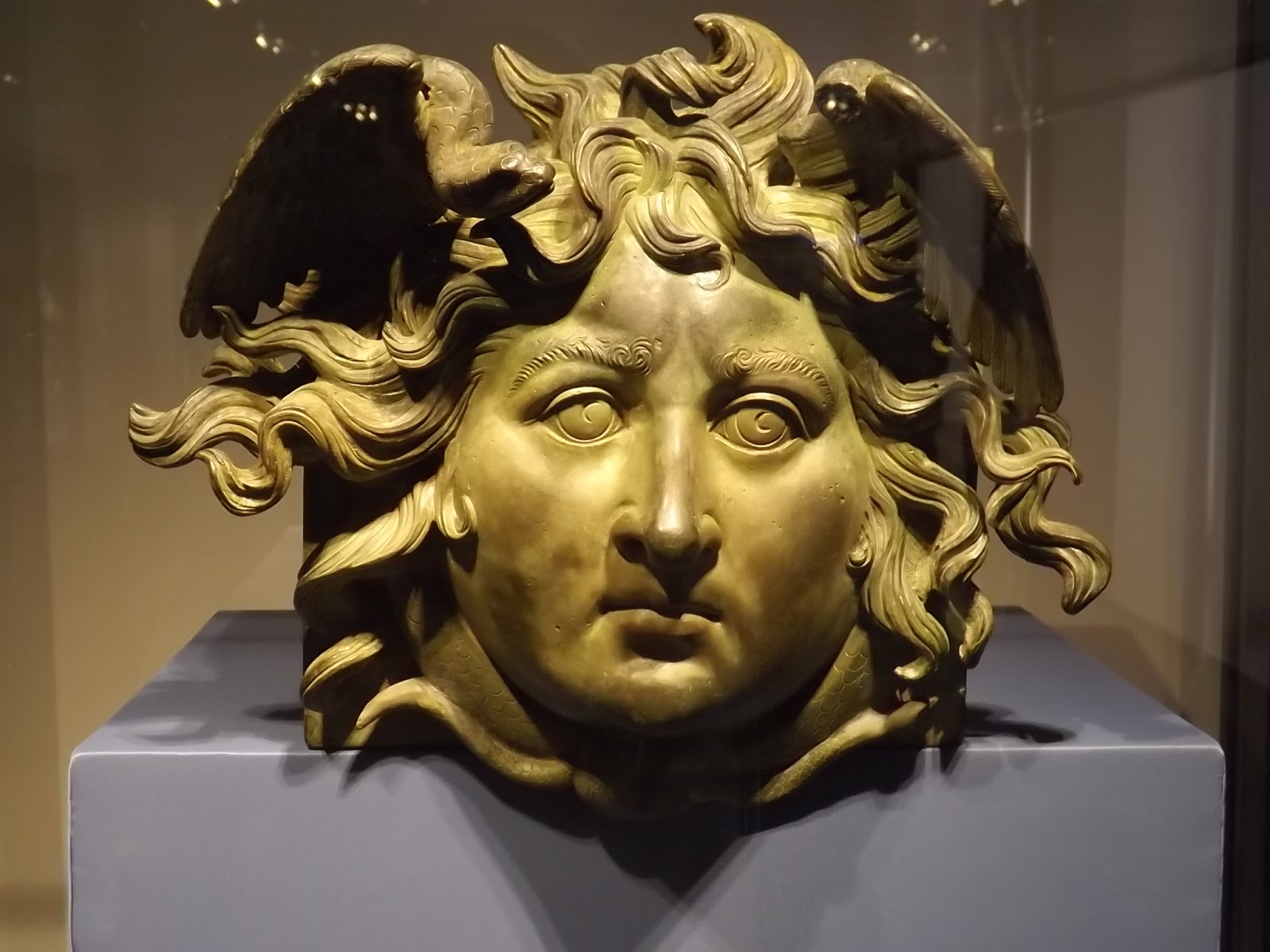
Medusa

Vespasian

Apollo

Livia's Dining Room

Mosaics


Bedroom frescoes


Mithras killing a bull


Thursday, June 25, 2015

Alba Fucens

Today (Weds., June 24) we went to Alba Fucens, a city originally inhabited by a tribe called the Marsi in an area crossed by important trade routes through the mountains.


Panoramic photo of the area.  The tops of the neighboring mountains are buried in cloud.

The Marsi people believed they were descended from Angitia, the sister of Medea and niece of Circe.  Medea and Circe were two of the most famous witches in the ancient world, and Angitia inherited some of the ability as well.  She was a good witch though, and specialized in healing, particularly snake bites.

Atop the highest hill at Alba Fucens was once a temple to Apollo.  The early Christians used the structural materials of the temple and rebuilt it into a church.  Here you can see the temple columns now used as interior supports.


The ancient town lies just down the hill from the church.

On the side of the hill, between the church and the ancient town is an amphitheater, built by Macro who was the Prefect of the Praetorian Guard who helped Caligula come to power.  Caligula later ordered him to commit suicide.  In his will, Macro had left enough money to build this amphitheater for his home town.

The inscription above the arch reads:
Q NAEVIUS Q F FAB CORDUS SUTORIUS MACRO
PRAEFECTUS VIGILUM PRAEFECTUS PRAETORI
TI CAESARIS AUGUSTI TESTAMENTA DEDIT

Since the Romans commonly abbreviated things, using common conventions (they would have felt right at home texting), the full script would read:
Quintus NAEVIUS Quinti Filius CORDUS SUTORIUS MACRO
PRAEFECTUS VIGILUM PRAEFECTUS PRAETORI
TIberi CAESARIS AUGUSTI TESTAMENTA DEDIT

Translated it reads:
Quintus Naevius Cordus Sutorius Macro, son of Quintus, from the Fabian tribe
Prefect of the Vigiles, Prefect of the Praetorian Guard
Of Tiberius Caesar Augustus gave this in his will.


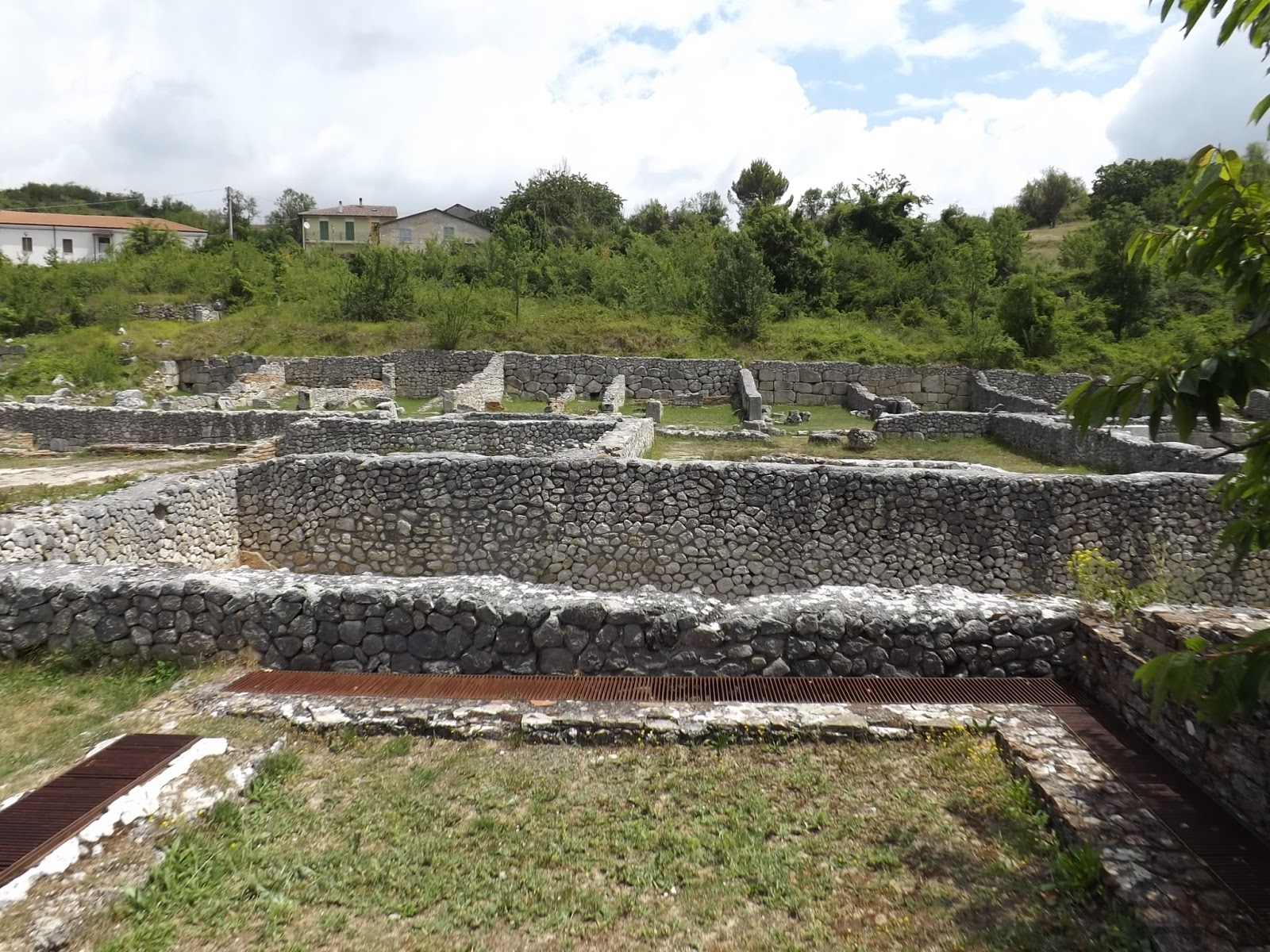
In the ancient town are a variety of buildings.  The building here was a fuller, and next to it was a bakery.


The last thing we saw was a Roman milestone, erected around 350 AD.  It marks mile 58 from Rome.

Tuesday, June 23, 2015

Largo di Torre Argentina

Today, by special permission, we were allowed to go underneath the City Hall of Rome.  The City Hall is located in a palazzo on top of the Capitoline Hill (Campidoglio), between the two palazzos that are the Capitoline Museum.  This area of the Capitoline Hill is thought to have been a building known as the Tabularium.  The Tabularium also enclosed an existing temple to Veiovis.  More about Veiovis later.

Before the Tabularium was built, it is believed the site also was home to a temple to Juno Moneta, pictured below.
 Juno Moneta (Juno the one who warns) would have been an appropriate temple to place on the Capitoline Hill, since it was the geese sacred to Juno that warned the Roman soldiers in the citadel of a sneak attack by Gauls in 387 BC.

While we were waiting for the guard to come open up our super top secret area, I took advantage of the beautiful vantage point to snap some more photos of the Forum.  Here is the Temple of Saturn.

The Arch of Septimius Severus.
 The remaining columns of the temple to Vespasian.
 All three of those together.
 The columns of the Temple of Castor and Pollux, featured a few days ago.

Inside we saw the remains of a temple to Veiovis.  Veiovis had shifting roles.  Originally he was sort of an anti-Jupiter and a god of revenge.  Later he becomes associated with healing and in this role another temple was built to him on Tiber Island which was a center of healing and medicine in Ancient Rome.

After our visit underneath City Hall, we walked to the Largo di Torre Argentina.  During Mussolini's reign in Italy, he razed some apartment buildings with the intent to create a traffic circle.  As the demolished the apartments, they found the remains of four ancient temples underneath.  Below is a panoramic photo of the site.


At the right of the site is Temple A, thought to be a Temple of Juturna.  I covered Juturna a few days ago in the blog.


The next temple, Temple B, is a Temple of Fortuna.  Notice that this is a round temple.
Temple C, the third temple, is believed to have been a Feronia, a native Italian goddess of fertility.

Temple D, the last of this group, is only partially excavated.  It is thought to have been a temple for the Lares Permarini.  Lares were the Roman equivalent of "guardian angels."  The Lares Permarini were those Lares who looked after all sailors.


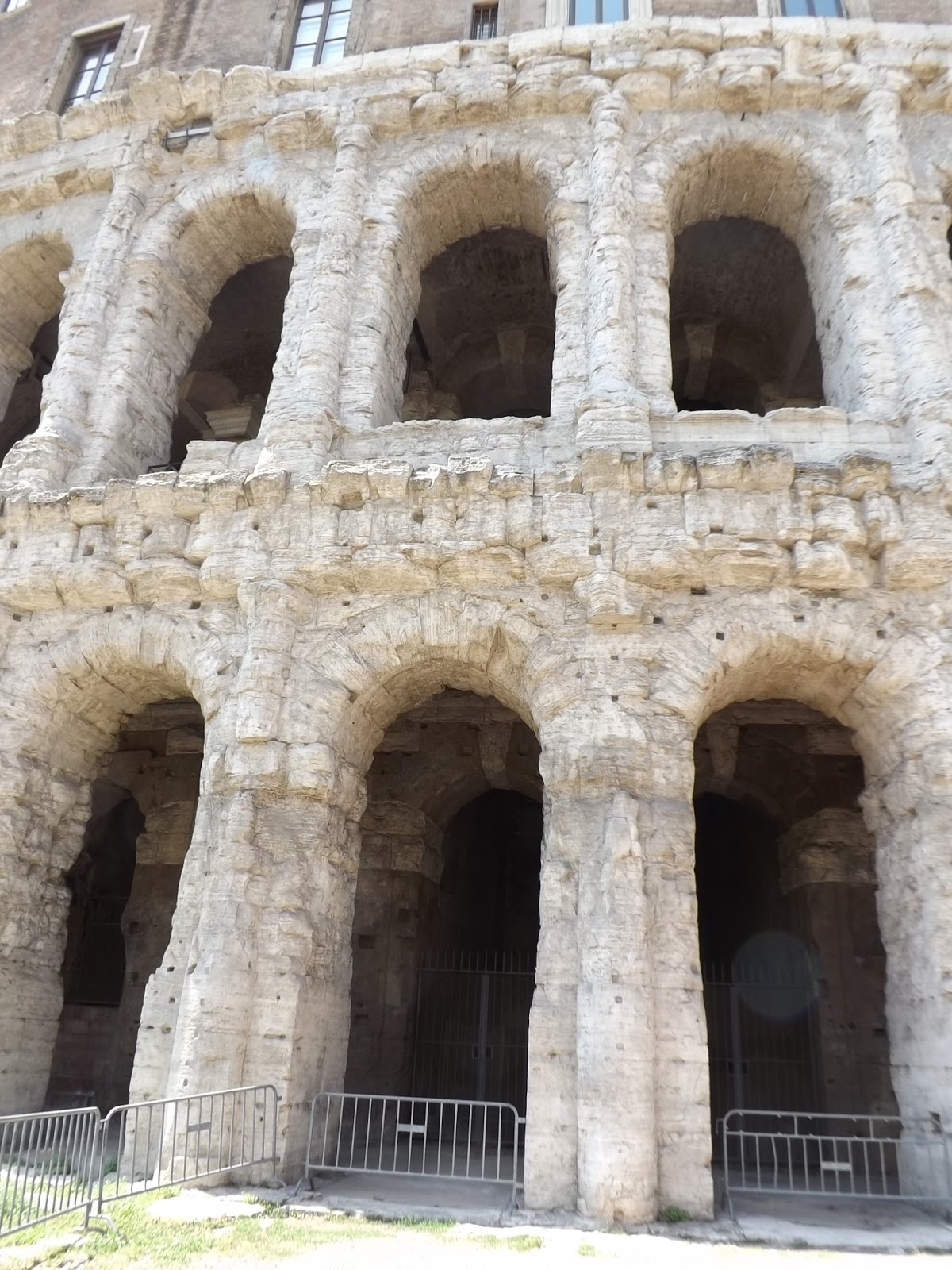
 We then went to the Theater of Marcellus.  Next to the theater are the remains of a Temple of Apollo.  This temple is known as Apollo Sosianus, from the name of its final rebuilder, Gaius Sosius.

 Marcellus was the nephew of Augustus and was believed to have been Augustus' planned heir.  He died at an early age and Augustus built this theater in his honor.  Above the remains of the theater are apartments.  According to our professors, this is some of the most expensive real estate in Rome.